
postmigrant perspectives on the unspoken and the unspeakable
-
L’Association Bosančica écrit:
À travers la projection du court-métrage d’@annafersztand, puis les prises de parole d’Alma Draganovic Cehic (@draganovicalma3 ), de Caroline Rosenberg (@maradcollectif ) nous avons traversé des récits ancrés dans des histoires familiales marquées par la Shoah et par les crimes de masse commis en Bosnie-Herzégovine. Des récits portés avec justesse, pudeur et courage, qui ont donné toute sa place à la transmission — dans ses formes visibles comme dans ses silences.
La mémoire de Biljani, longtemps marginalisée, a trouvé un espace d’écoute et de reconnaissance à travers les archives familiales présentées et le témoignage d’Alma, rappelant combien certaines mémoires restent encore en marge des récits dominants. Le dialogue qui s’est ouvert ensuite a permis de croiser les héritages, les expériences et les engagements, sans hiérarchisation des souffrances, mais avec une exigence commune de vigilance et de responsabilité. -
Pôle Sud, Lausanne
In my doctoral thesis Postmigrant Perspectives, I draw on my own position as a third-generation descendant of a Holocaust survivor as a source of knowledge and experience. In the spirit of multidirectional memory (Rothberg 2009), I seek to develop a dialogical understanding of the effects of forced migration resulting from the Yugoslav Wars (1991–2001) on the second generation in Switzerland.
Based on the assumption that experiences of loss resulting from flight and migration have cross-generational effects, I combine knowledge of the Holocaust, migration, and post-war experiences not in a competitive manner, but by mutually elucidating and productively expanding upon them.
Methodologically, my project is based on a videographic-participatory approach that combines epistemic listening — derived from the psychoanalytic practice of equal attention (Freud 1912) — with video-voice (Wang and Burris 1997) to create a space in which the unspeakable and the search for biographical traces can become visible.
By viewing migration not as a subject of research but as a research perspective, my work contributes to a new understanding of post-migrant Swiss society (Espahangizi 2018), a shift in individuals’ self-awareness, enabling them to gain their own new insights into their being-in-the-world (Jackson 2010), whilst simultaneously making a methodological contribution to cultural and post-migration studies, culminating in artistic realisations, as first demonstrated at Theater 2.21. In doing so, together with participants of this research, we explore and reimagine spaces and bring them to life simultaneously through multimedia, ethnographic, and testimonial storytelling and reflections.
— The dissertation is supervised by Prof. Dr. Christine Lötscher (University of Zurich, ISEK) and Dr. Greg Scott (DePaul University Chicago), Dr. Erik Porath (Psychoanalytische Bibliothek Berlin) and is funded by the Swiss National Science Foundation.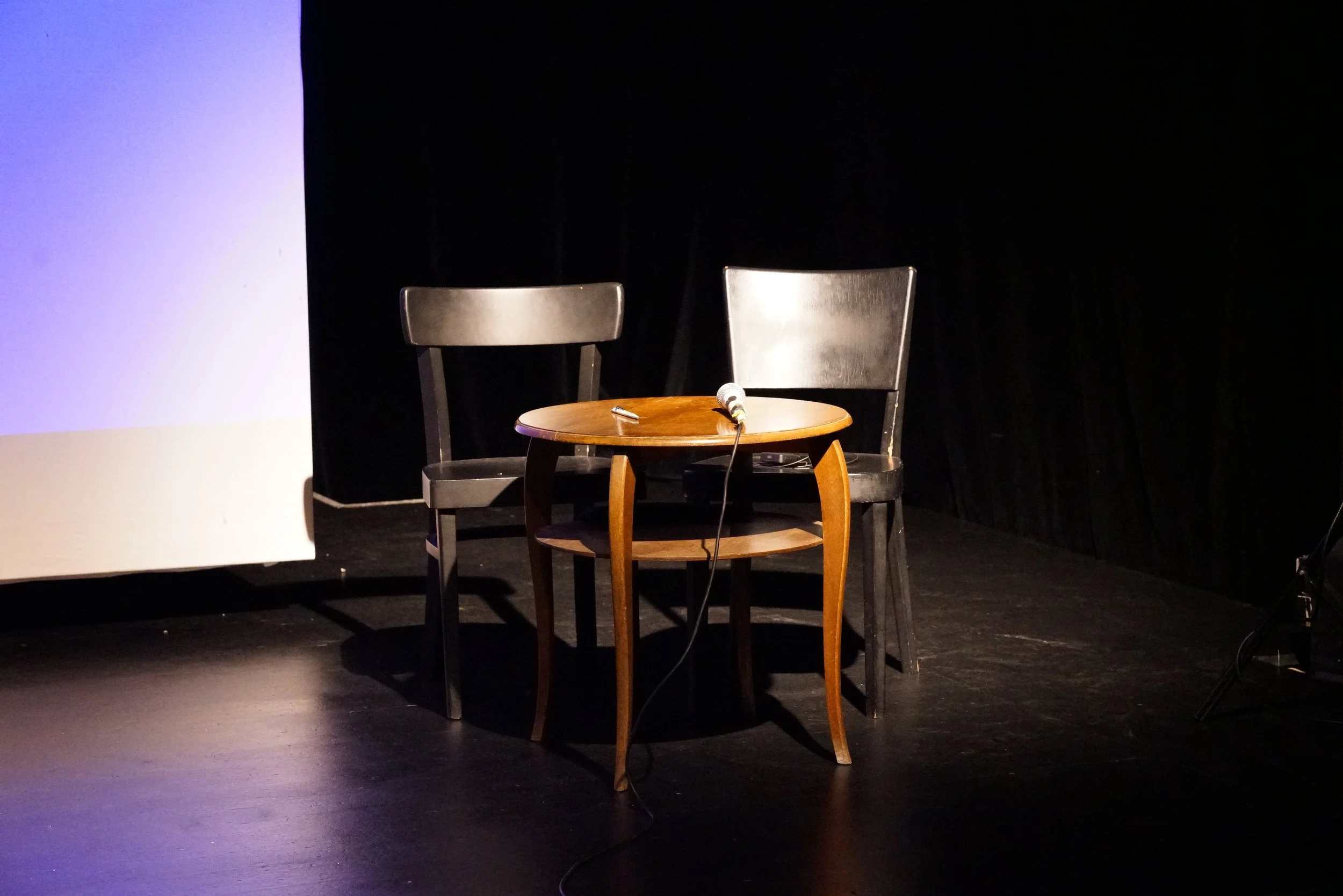
-
interroge ce qui demeure après la violence extrême, après la guerre, les atrocités et le génocide. Que reste-t-il lorsque ni les mots ni la mémoire ne suffisent à contenir l’horreur ? Infligés par l’humain à l’humain, ces crimes laissent des traces de vide, d’absence et de silence, inscrites autant dans les corps que dans les lieux et les récits.
Né de la collaboration entre Sedina Delić-Tanović, survivante du génocide bosniaque et détenue au camp de Sušica en 1992 (Bosnie-Herzégovine), et l’anthropologue Anna Fersztand, ce documentaire explore l’héritage de la violence : ce qui disparaît, ce qui se transforme et ce qui se transmet malgré tout. Entre mémoire intime et mémoire collective, le film propose un travail d’écoute et de présence, une tentative de comprendre comment vivre avec ce qui reste et comment habiter l’absence. Ce projet de recherche est financé par le fonds national suisse. -
Théâtre 2.21 Lausanne
in collaboration with Cinéma Oblo, Lausanne
-
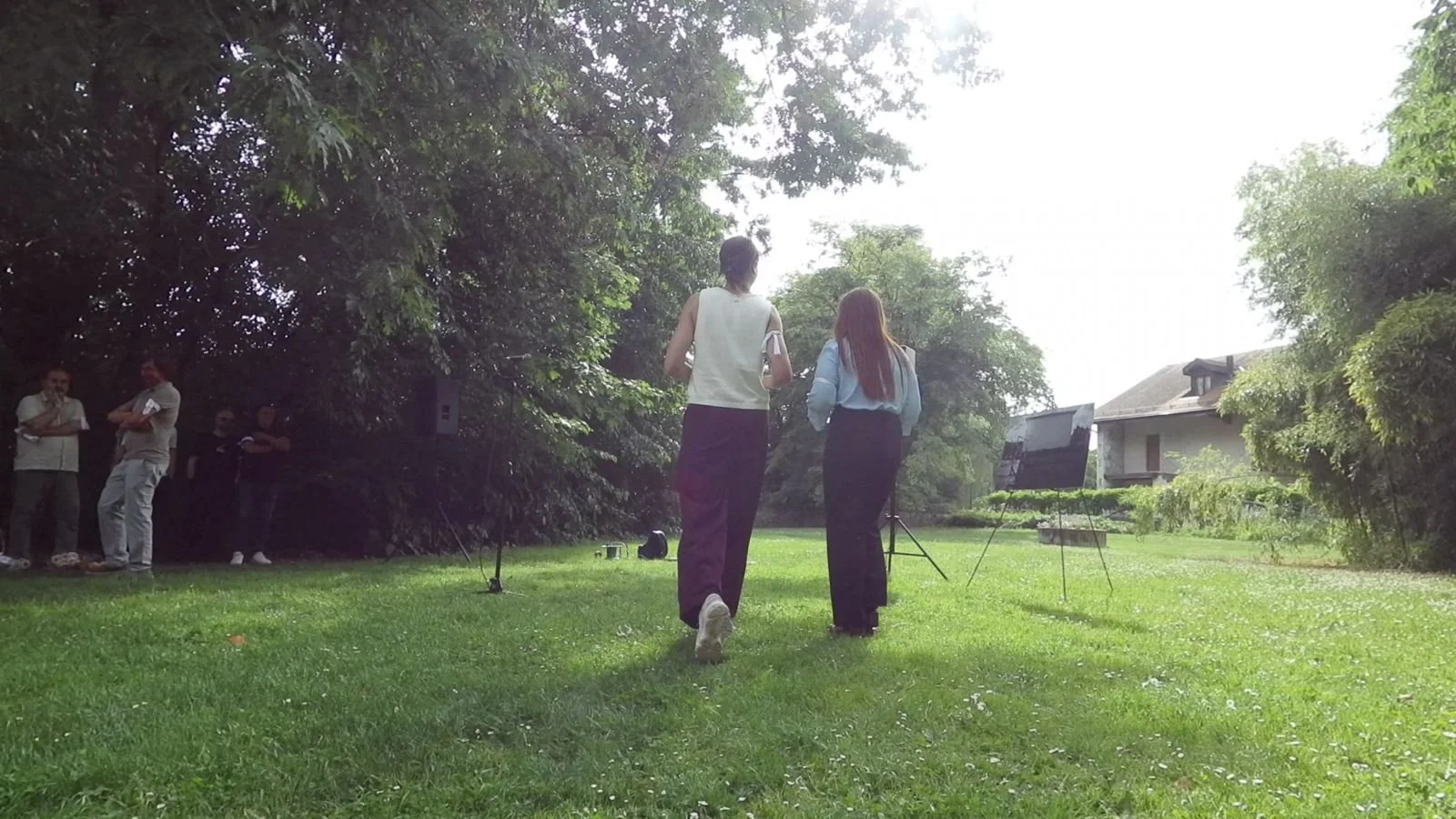
Organisé par l’Association Bosančica:
“Il y a 34 ans, à Prijedor, après avoir pris le pouvoir par la force, les autorités serbes imposaient, par voie de décret, aux populations civiles bosniaques musulmanes et catholiques de marquer leurs habitations de draps blancs et de porter un brassard blanc dans l’espace public. (…)”
Suite sur le site instagram: @bosancica_cbb -
Jardin des Disparus, Meyrin, Genève